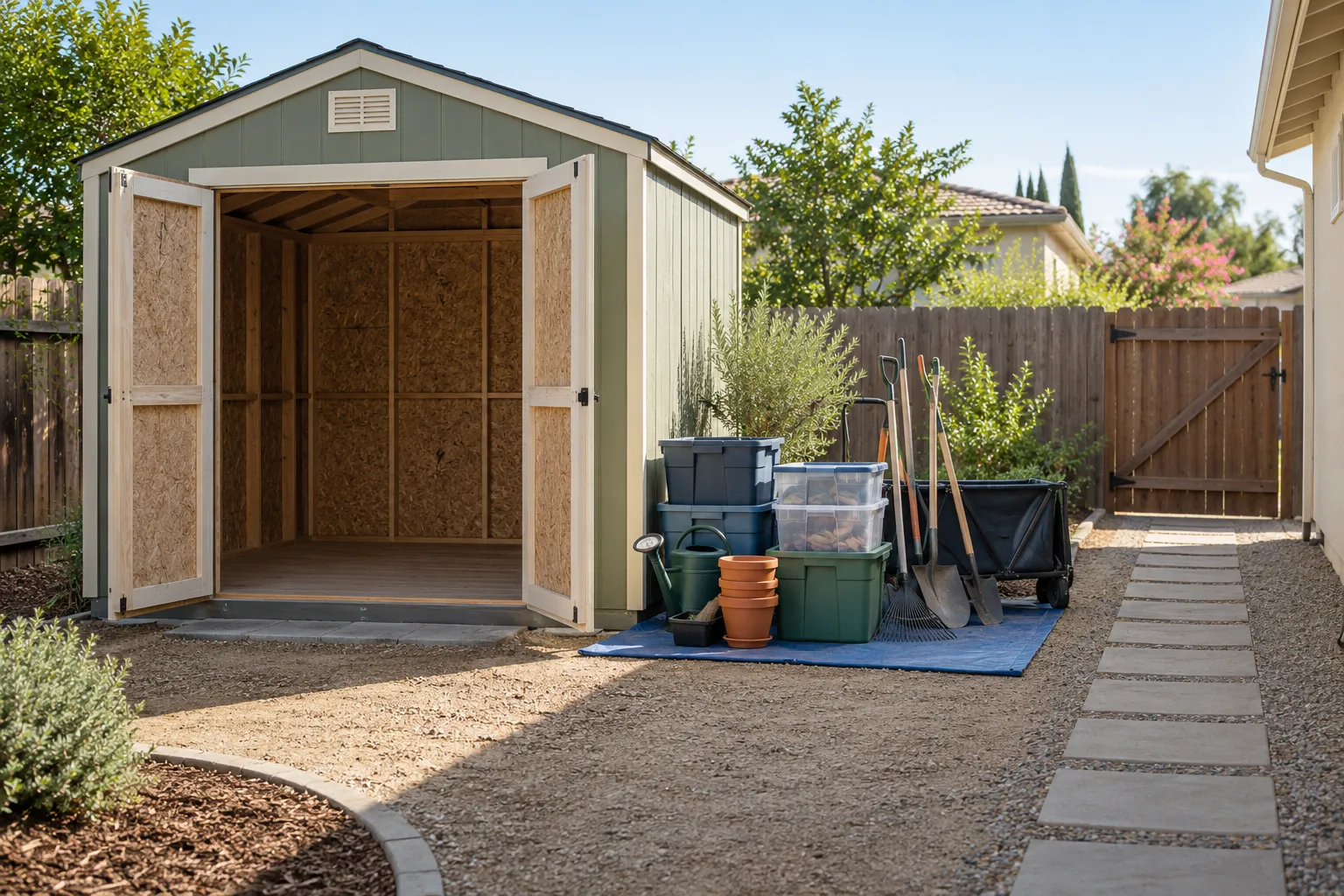
Start inside the shed
Separate what stays, what can be donated or sold, and what needs a disposal decision. Remove loose tools, bins, garden equipment, and wall-mounted items. Keep paint, fuel, pesticides, batteries, propane cylinders, and other restricted materials out of the ordinary debris pile until an approved destination is confirmed.
Photograph what cannot be seen later
Take wide photos of each exterior wall and the roof, then photograph the floor, framing, shelves, and any damaged area. Include the slab or skids if visible. These images help a provider spot roofing layers, built-ins, rot, and attachments that affect the work plan.
Measure the access route
Measure the narrowest gate or passage, not the widest part of the yard. Count steps, note sharp turns, and estimate the carry distance to a safe loading space. Move vehicles, hoses, toys, and planters away from the route before work begins. If the only path crosses a neighbor’s property or a shared alley, resolve access first.
Check utilities and attachments
Look for outlets, lights, extension wiring, water lines, irrigation controls, anchors, and lean-to additions. OSHA demolition rules require service lines to be shut off, capped, or otherwise controlled before demolition work. A qualified person should handle any utility question.
The handoff list
Give the estimator the address, shed size, construction type, foundation, utility notes, access measurements, photos, desired timing, and any permit information. A complete handoff reduces the chance that the scope changes when the crew arrives.
Sources checked
Sources were reviewed October 12, 2026. Confirm current local requirements before acting.
Planning this type of job?
Review Shed Hauling