Condition decides the options
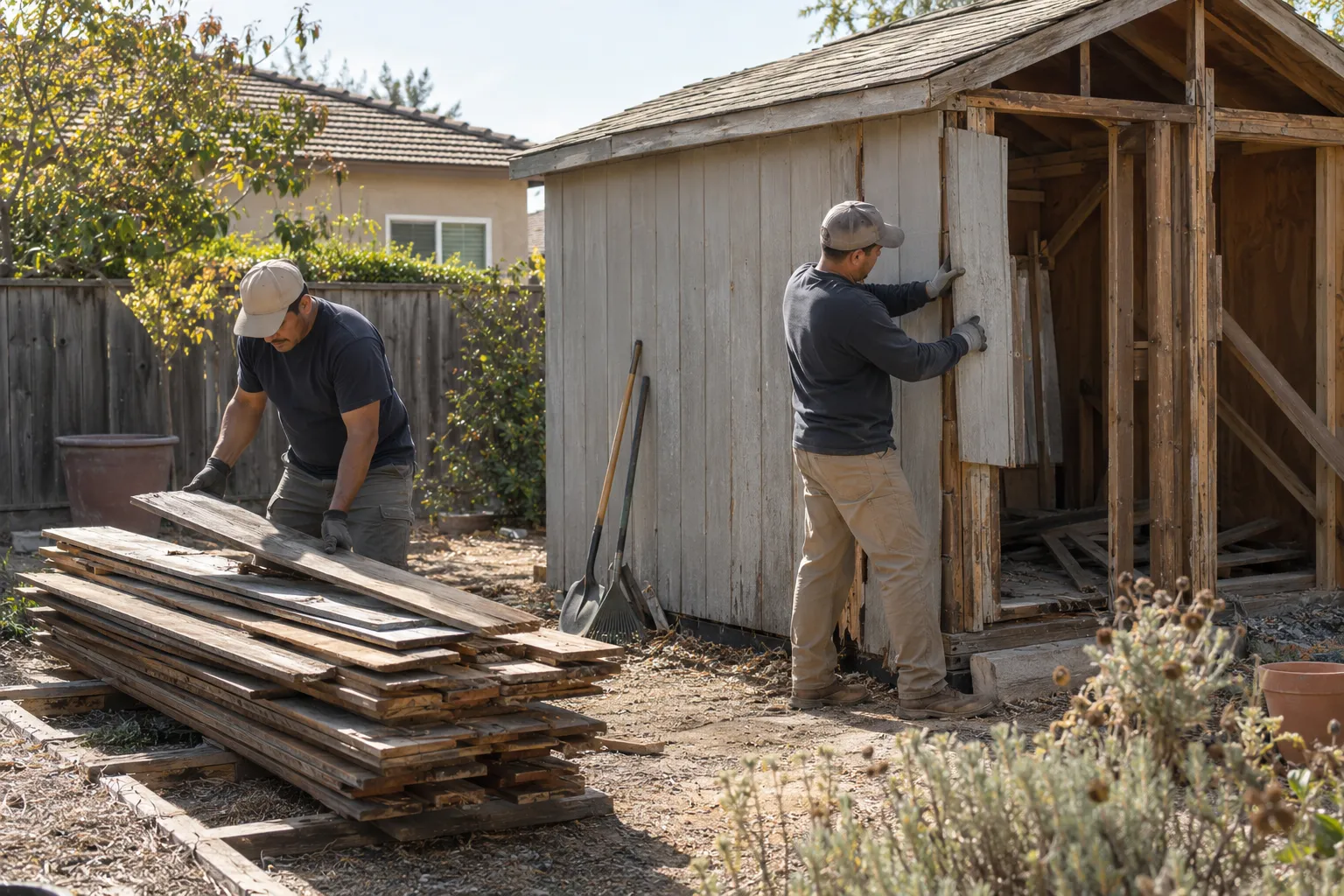
Straight, dry boards without rot or contamination may have reuse value. Roofing felt, composite panels, pressure-treated pieces, painted wood, and lumber packed with fasteners may need different handling. Do not promise donation or recycling until a receiving facility accepts the exact material.
Separate before the pile is mixed
EPA guidance lists wood and metal among construction and demolition materials that can often be recovered when they are not contaminated. Once roofing, trash, glass, and soil are mixed into the same pile, sorting becomes harder. Decide before dismantling whether intact boards, metal hardware, and ordinary debris need separate stacks.
Questions for a receiving facility
Ask whether the facility accepts painted wood, treated lumber, plywood, shingles, or nail-bearing boards. Confirm hours, load-cover rules, fees, and whether receipts are available for a permitted C&D project. Rules can change, so use the facility’s current answer.
A practical sorting checklist
Keep reusable boards dry and flat. Pull or bend over exposed nails only when it can be done safely. Separate sheet metal and clean hardware. Keep chemicals, insulation, suspect asbestos-containing material, and unknown coatings out of the ordinary wood pile. Photograph sorted loads when project documentation requires it.
What HaulProven needs to know
Send photos that show siding, roofing, framing, paint condition, and the base. Mention fire, flood, termite, or mold damage. That information helps define whether careful deconstruction is realistic or the job should be planned as demolition debris removal.
Sources checked
- EPA sustainable management of C&D materials
- EPA reuse and recycling opportunities
- San Joaquin County C&D diversion program
Sources were reviewed October 12, 2026. Confirm current local requirements before acting.
Planning this type of job?
Review Wood Shed Removal